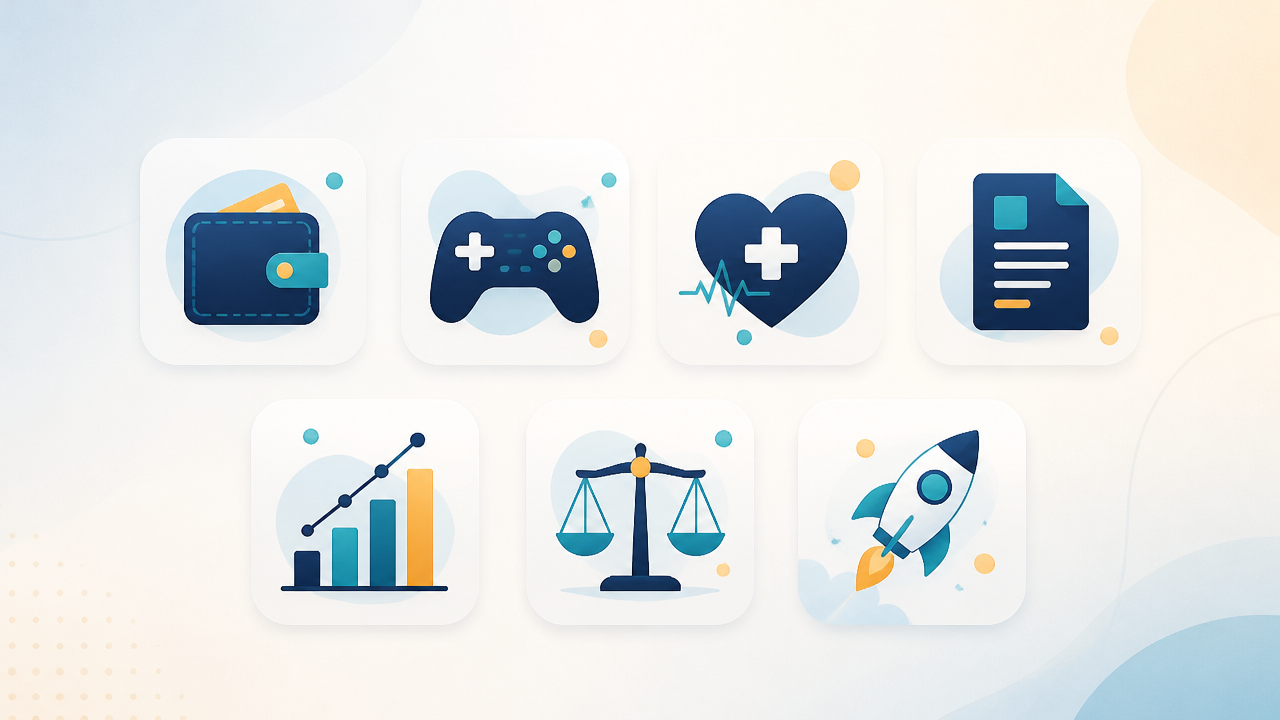
7 Data Science Portfolio Projects Recruiters Actually Read
Following our portfolio-building guide, here are seven specific project directions chosen for genuine depth potential over surface polish — pick one or two, not all seven, and go deep.
1. A Personal Finance or Spending Analysis (Using Your Own Real Data)
Analyze your own bank or credit card transaction history — categorize spending, find trends, build a forecast of future spending. This project is genuinely yours (no one else has this exact dataset), forces real messy-data cleaning (transaction descriptions are rarely clean), and lets you speak to it with authentic specificity in an interview.
2. Predicting Something From a Domain You Genuinely Care About
Sports outcomes, video game win rates, box office performance — pick a domain you actually follow, not one you think looks impressive. Genuine interest shows in the quality of your questions and the depth of your exploration, and it makes the interview conversation about it far more natural and convincing.
3. A Public Health or Government Open Data Analysis
Government open data portals offer genuinely messy, real-world datasets with meaningful questions attached — public health trends, economic indicators, local government spending. This signals comfort working with real institutional data, which differs meaningfully from clean, pre-packaged tutorial datasets.
4. A Text Classification Project on Real, Non-Tutorial Text
Scrape and classify real text — product reviews, news headlines, social media posts on a topic you choose — rather than using a pre-cleaned tutorial sentiment dataset. The scraping and cleaning step alone demonstrates skill a downloaded, ready-to-use dataset doesn't require.
5. A Time Series Forecast With a Real Business Framing
Pick a forecastable real-world series — local weather patterns, a company's historical stock data, seasonal retail trends — and frame the analysis explicitly as a business decision: "if I were planning inventory for this pattern, here's what I'd recommend." This framing, more than the technical forecasting method itself, is what makes the project stand out.
6. An A/B Test Design and Analysis (Simulated or Real)
Design a hypothetical or actual A/B test, including the statistical reasoning behind sample size, and analyze results with proper significance testing. This directly demonstrates experimental design thinking, a skill many portfolios skip entirely in favor of purely observational analysis.
7. An End-to-End Deployed Mini-Application
Take any of the above and deploy it as a simple, live web application (even a basic one) rather than leaving it as a notebook. This demonstrates the full pipeline from analysis to something a non-technical person could actually interact with — a real differentiator, since most portfolios stop at the notebook stage.
How to Choose Which of These Fits You
Pick based on genuine interest and your target role: analyst-focused roles benefit from projects 1, 3, and 5 (business framing, real institutional data, forecasting); more technical or ML-focused roles benefit from projects 4, 6, and 7 (text processing, experimental design, deployment). Project 2 works for either, depending on the specific domain and depth of analysis.
What Makes Any of These Actually Strong
The project idea itself matters less than the execution: genuine question framing, documented reasoning about decisions, honest handling of messy data, and a clear write-up explaining what you found and what its limitations are. A simple project executed with real depth beats an ambitious project executed shallowly, every time an interviewer actually digs in.
Frequently Asked Questions
Should I pick the most technically impressive project idea on this list?
No — pick based on genuine interest and relevance to your target role. Depth and authentic engagement matter more than which idea sounds most sophisticated on paper.
How long should a single portfolio project take?
Enough time to genuinely explore the data and iterate on your approach — often several weeks of part-time work for real depth, not a rushed weekend project.
Can I combine ideas from this list?
Yes — for example, a time series forecast (5) deployed as a live application (7) combines two of these into one strong, more comprehensive project.
The strongest portfolio projects come from genuine curiosity and real, sometimes messy data — not from replicating the most popular tutorial dataset with slightly different code. Pick one or two of these seven directions based on your actual interests and target role, and prioritize depth of execution and reasoning over breadth or technical flash.