LangChain vs LlamaIndex: Which Framework Should You Learn?
Both frameworks help you build LLM-powered applications, and both have grown to cover overlapping ground — but they started with different core strengths, and those origins still shape where each one feels more natural to use.
The Core Difference
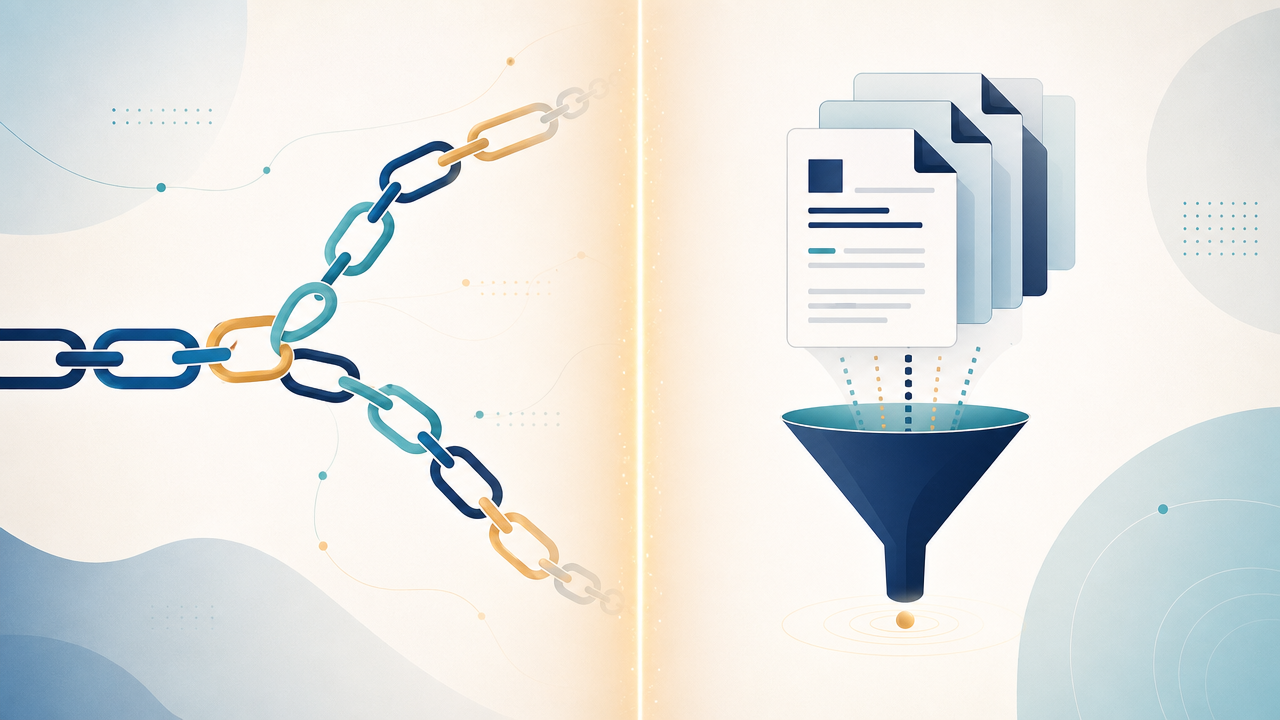
LangChain started as a general-purpose framework for chaining LLM calls together — building multi-step logic, managing conversation memory, integrating tools and agents. It's broader in scope, covering everything from simple prompt chains to complex agent systems.
LlamaIndex started with a sharper focus on data ingestion and retrieval — connecting LLMs to your documents and data sources efficiently, with strong tooling specifically for building search and retrieval pipelines. It's narrower but often more polished for that specific RAG-focused use case.
Data ingestion and retrieval, RAG-focused pipelines
Learning curve
Steeper — broader API surface to learn
Gentler for RAG specifically, narrower scope
Best for
Complex multi-step applications, agents, varied tool use
Building a strong RAG system as the primary goal
Community size
Larger, more general-purpose examples available
Smaller but more RAG-specialized examples
Flexibility
High — can be used for almost any LLM application pattern
More opinionated toward retrieval-centric applications
Where LangChain Wins
You're building something beyond simple RAG — agents, complex multi-step reasoning chains, applications integrating multiple tools and APIs beyond just document retrieval.
You want maximum flexibility and don't mind a steeper learning curve in exchange for broader applicability across many project types.
You're also interested in agent development — see our AI Agents & Automation category — since LangChain's ecosystem (including LangGraph) extends naturally into that territory.
Where LlamaIndex Wins
Your primary goal is a strong RAG system — connecting an LLM to your documents and data as cleanly and efficiently as possible, without needing much beyond that.
You want a gentler learning curve for that specific use case, since LlamaIndex's narrower focus means less to learn before you're productive on a retrieval-centric project.
You're working with varied or complex data sources — LlamaIndex's data connector ecosystem is particularly strong for ingesting from many different source types.
Can You Use Both Together?
Yes, and some real projects do — using LlamaIndex for its strong data ingestion and retrieval tooling, while using LangChain for the broader application logic and orchestration around it. This isn't necessary for simpler projects, but it's a reasonable pattern once you understand both well enough to know where each one's strength actually helps.
A Practical Recommendation
If you're not sure yet what you're building beyond "something with RAG," start with LlamaIndex — its narrower focus gets you to a working retrieval system faster, and the concepts you learn (chunking, embeddings, retrieval strategy) transfer directly if you move to LangChain later for broader application logic. If you already know your project needs complex multi-step logic or agent behavior beyond retrieval, start with LangChain directly.
Frequently Asked Questions
Which framework has better documentation?
Both have improved significantly over time and are generally solid; specific gaps shift as each project updates, so check current documentation quality directly rather than relying on older comparisons.
Is one of these frameworks going to become obsolete?
Both remain actively maintained and widely used as of this writing — this is a fast-moving space, so treat any framework comparison as a snapshot rather than a permanent ranking.
Do I need to know Python well before learning either framework?
Yes — both assume working Python fluency; neither is designed as a first introduction to programming.
Where should I start learning hands-on?Developing LLM Applications with LangChain is a solid structured starting point if you've decided LangChain fits your project better.
Bottom Line
LlamaIndex's narrower, retrieval-focused design makes it the faster path to a working RAG system specifically; LangChain's broader scope makes it the better choice once your project needs more than retrieval — agents, complex chains, varied tool integration. Many real projects end up using both, but if you're choosing a starting point, match the framework to what you're actually building first, not to which one has more general buzz.