Course Overview
This DataCamp course walks you through the LangChain framework, the piece of software that sits between your code and whichever LLM you're calling — OpenAI, Hugging Face, or otherwise — and gives you one consistent way to wire prompts, chains, agents, and retrieval systems together. Instead of staying theoretical, it moves fairly quickly into building actual chatbot logic, so you come away having touched the real components rather than just hearing about them.
The course is split into three chapters that build on each other: starting with core LangChain pieces and basic chatbot mechanics, moving into chains built with LCEL (LangChain Expression Language) plus agent-based decision-making, and finishing with a full Retrieval Augmented Generation (RAG) workflow — loading documents, splitting them, embedding them into a vector database, and retrieving relevant chunks to feed back into an LLM.
What You Will Learn
- How to plug both proprietary models (OpenAI) and open-source models (Hugging Face) into LangChain, including basic parameter tuning
- Writing and chaining prompt templates, including few-shot prompting setups
- The practical difference between a straightforward LCEL chain and an agent that decides its own next steps
- Building and integrating custom tools with ReAct agents
- Loading data from PDFs, CSVs, and HTML, then splitting it by character or recursively for better retrieval
- Setting up a vector database and building a working RAG chain end to end
Course Structure
- Chapter 1 — Introduction to LangChain & Chatbot Mechanics: core components, OpenAI and Hugging Face models, prompt templates, few-shot prompting
- Chapter 2 — Chains and Agents: LCEL sequential chains, what agents are, ReAct agents, custom tool creation and integration
- Chapter 3 — Retrieval Augmented Generation (RAG): document loaders, text splitting strategies, vector database storage and retrieval, building a RAG chain
Who Is This Course For?
This fits developers or data people who already know their way around APIs — particularly the OpenAI API — and have some grasp of what text embeddings are. If you've never called an API before or don't know what an embedding is, you'll likely feel like you missed a step, since the course leans on that background rather than teaching it. On the flip side, if you've already shipped a few LangChain projects or built RAG pipelines manually, this will probably feel introductory rather than advanced.
Format & Time Commitment
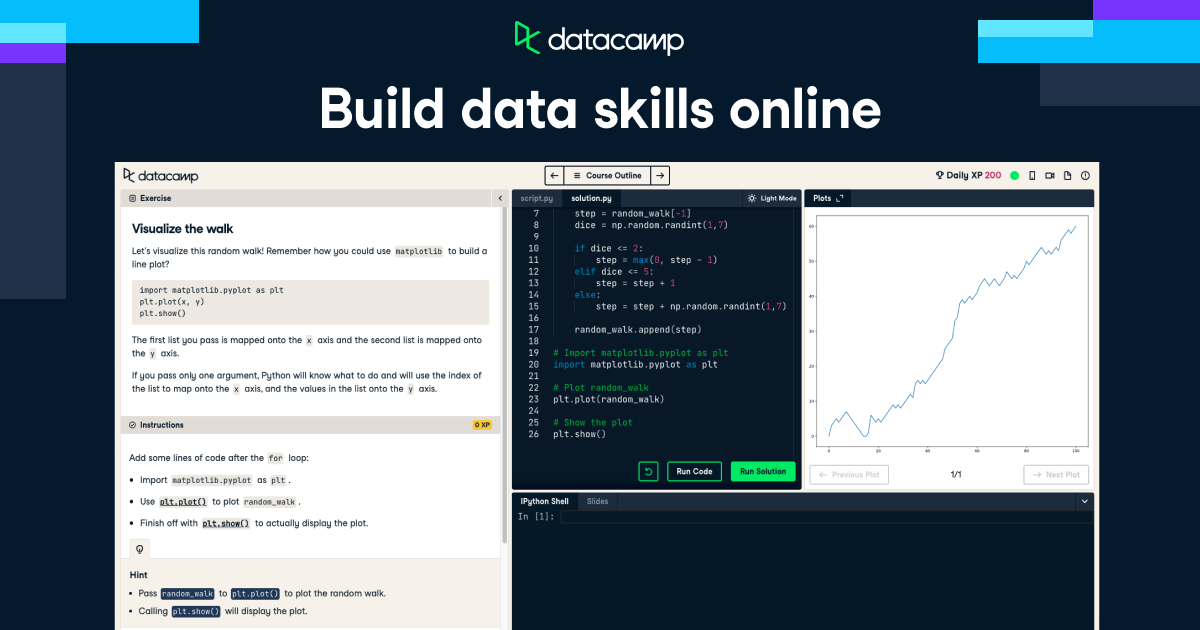
It's self-paced, roughly 3 hours of video content split across 10 lessons, with 33 coding exercises mixed in (DataCamp assigns these an XP value, totaling 2,750 XP for the course). There's no fixed schedule or deadline — you work through it whenever, at whatever speed suits you.
Pros and Cons
Pros
- Covers the full RAG pipeline — not just chatbots — in one course, which is a reasonably complete arc for 3 hours
- Exercise-heavy format (33 exercises) means you're writing code constantly instead of just watching
- Compares open-source and closed-source model workflows side by side rather than picking one and ignoring the other
Cons
- Three hours is genuinely tight for a topic this broad — agents, custom tools, and RAG each get touched but not gone deep into, so don't expect mastery by the end
- The listed prerequisites (embeddings + OpenAI prompt engineering) are real requirements, not just suggestions — skipping them will likely slow you down
- As a single course rather than a project-based deep dive, you won't build one large portfolio piece — just smaller, disconnected exercises per topic
FAQ
Does this course include a certificate?
Yes — DataCamp issues a Statement of Accomplishment once you finish, which you can add to LinkedIn or a resume.
Do I need prior AI experience to take this?
You're expected to have completed DataCamp's Introduction to Embeddings and Prompt Engineering with the OpenAI API courses first, or have equivalent familiarity with APIs and embeddings.
What's the real difference between a chain and an agent here?
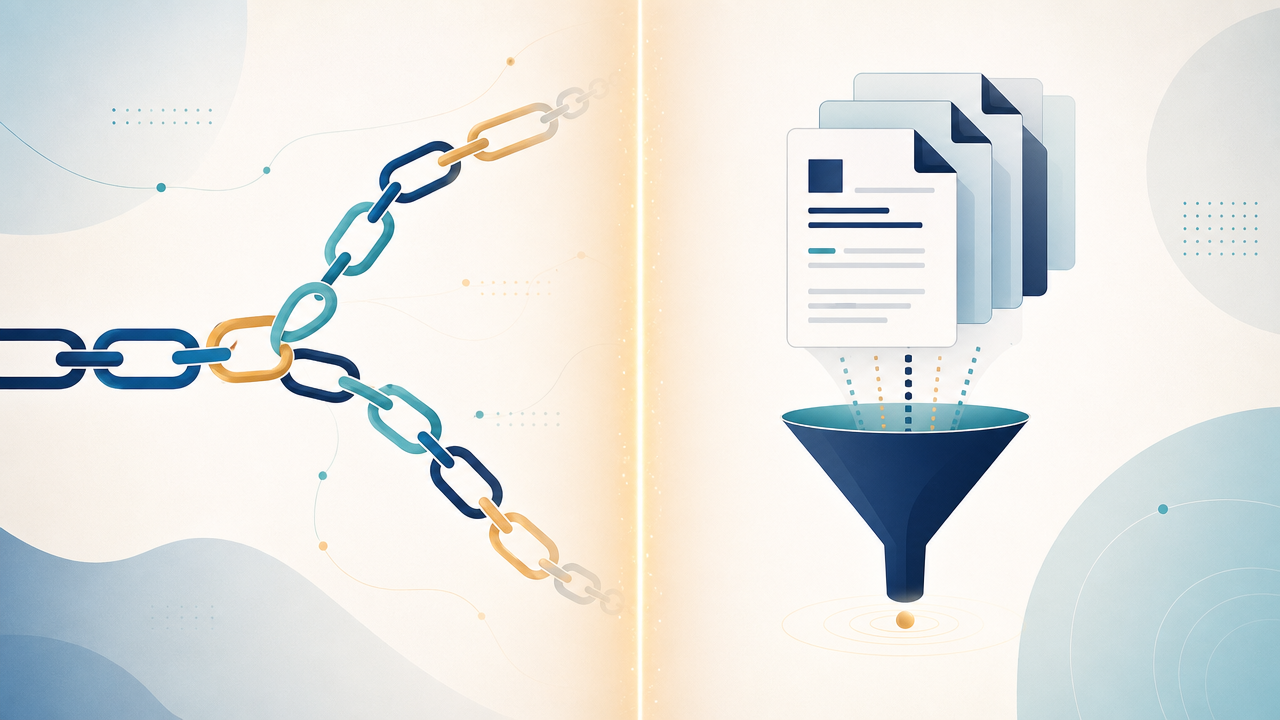
A chain runs a fixed sequence of steps — prompt in, model out, maybe parsed. An agent uses the LLM itself to decide what to do next, including whether to call outside tools. The course treats this distinction as a core teaching point in Chapter 2.
Is this part of a larger DataCamp track?
Yes — it sits inside DataCamp's "Associate AI Engineer for Developers," "Developing AI Applications," and "Developing Applications with LangChain" tracks, so if 3 hours isn't enough, those paths extend the same material.
If LangChain and RAG workflows sound like the gap in your current skill set, the official course page has the full curriculum breakdown worth a look.