Book Overview
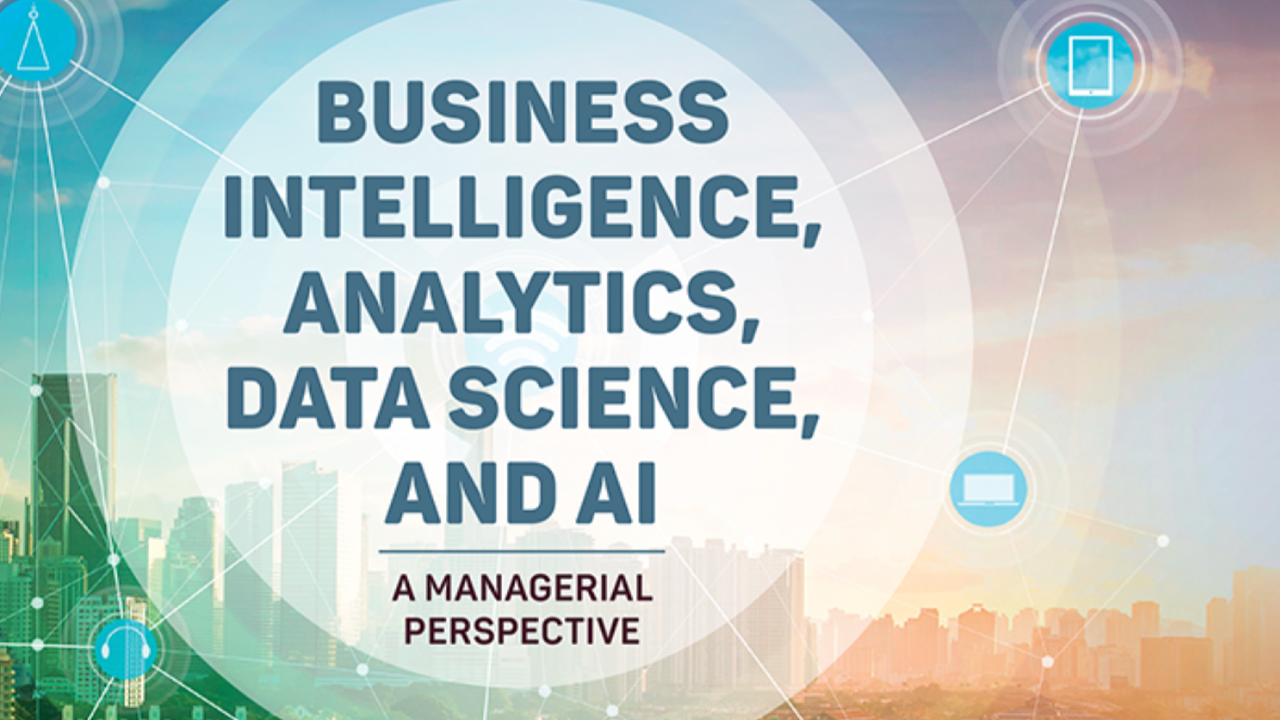
This Pearson textbook by Ramesh Sharda, Dursun Delen and Efraim Turban gives a managerial view of the whole analytics field. Rather than teaching you to build models, it explains what business intelligence, analytics, data science and AI are, how organizations use them, and what managers need to know to invest in and govern them. The fifth edition, published in 2023 with a 2024 copyright, merges two earlier titles from the same authors into a single book and adds chapters on newer AI tools.
The book is organized around the familiar analytics ladder: descriptive analytics for understanding what happened, predictive analytics for what is likely to happen, and prescriptive analytics for deciding what to do. Each chapter mixes concepts with application cases from many industries, and the final part looks at the tools landscape, AI trends, and ethical, privacy and managerial issues.
Key Topics Covered
- An overview of BI, analytics, data science and AI, and how they relate
- AI concepts, drivers, major technologies and business applications
- The nature of data, big data and statistical modeling
- Business intelligence, data warehousing and visualization
- The data mining process, methods and algorithms
- Text, web and social media analytics
- Deep learning and cognitive computing
- Optimization and simulation for prescriptive analytics
- The landscape of business analytics tools
- AI-based trends in analytics and data science
- Ethical, privacy and managerial considerations
How to Use This Book
It works best as a reference and course companion. Part I sets up the vocabulary and should be read first. After that, each part covers one layer of analytics and can be read on its own, so a manager interested in dashboards can go straight to the BI and visualization chapter, while someone evaluating an AI project can start with the AI and deep learning chapters. The application cases are useful to skim even when you skip the surrounding detail.
Who Should Read This
The book suits business and information systems students, managers who oversee analytics or BI teams, and analysts who want a broad map of the field before specializing. It needs no programming background.
It is not a hands-on guide. Readers who want to learn SQL, Python, Power BI or modeling step by step will need a practical course or a more technical book alongside it. People already working in data science will find much of it familiar.
Pros and Cons
Pros
- Covers the full span from BI and data warehousing to prescriptive analytics and AI
- Written for managers, with no coding required
- Many industry application cases
- Includes ethics, privacy and managerial issues, not just techniques
Cons
- Very long, and its breadth means individual topics stay at a survey level
- Little hands-on practice for building skills
- Fast-moving AI and tools material can date quickly in a printed textbook
- Several editions and formats exist, which makes choosing the right version confusing
Frequently Asked Questions
Is this book technical?
No. It explains methods conceptually for managers and students rather than teaching code.
What changed in the fifth edition?
It combines two of the authors' earlier books into one and adds chapters on newer AI tools.
Is it good for learning Power BI or Tableau?
It explains BI and visualization concepts, but you will need a tool-specific course to learn the software.
Who is it best for?
Business students and managers who want a structured overview of analytics and AI.
Compare the print, eText and Global Edition options on Pearson's page to find the version that fits your course or budget.