

Storytelling with Data (book)
Cole Nussbaumer Knaflic's widely-recommended book on data visualization, teaching chart selection and narrative structure through real.
Book Overview
This book starts from a simple observation: most people who work with numbers were never taught how to explain them. Analysts often hand over a default chart from their software and expect the audience to find the point. Knaflic argues that this fails. A chart should be built for a specific audience, to support one specific message, and every visual element should earn its place.
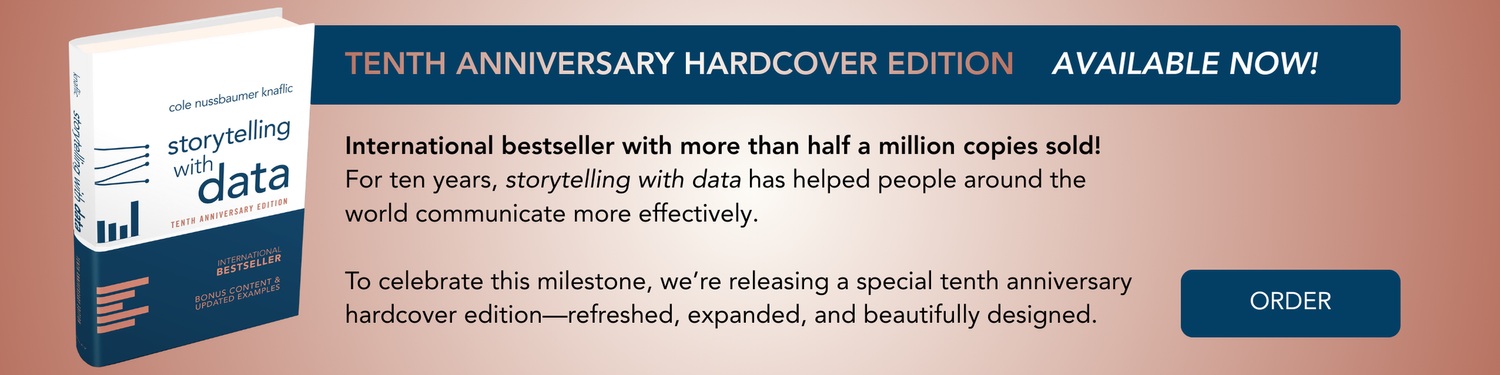
The method is taught mostly through before-and-after makeovers. A cluttered or confusing graph is shown, then rebuilt step by step with an explanation of each change. The book is aimed at business settings such as reports, slide decks and presentations. It teaches the thinking behind good visuals rather than the buttons of any one tool. This anniversary edition adds refreshed visuals and expanded material to the original framework.
Key Topics Covered
- Why context and audience come before any chart is drawn
- Matching the chart type to the question you are answering
- Spotting and removing visual clutter
- Using color, size and position to steer attention
- Applying design ideas such as alignment and hierarchy to graphs
- Building a narrative arc so a data presentation holds together
- Worked case studies that pull these ideas into one finished piece
How to Use This Book
It rewards reading in order. The early chapters set up the audience-first mindset, and later chapters on clutter, focus and design depend on that groundwork. The material really gains momentum in the middle, where the makeovers show how small decisions add up. The closing storytelling and case-study sections then tie everything together. Once you've finished, it's easy to flip back to a single chapter when you're preparing a specific chart.
Who Should Read This
- Analysts, managers and consultants who regularly present findings to non-technical colleagues
- Spreadsheet and slide-deck users who want their charts to look deliberate
- Students preparing to present research results
It is less suited to readers who want software tutorials or coverage of interactive dashboards. One reviewer says the book leaves those topics to other titles. Readers with years of design or visualization experience may find the core advice familiar.
Pros and Cons
Pros
- The makeover format makes it easy to see why each change improves a chart
- Short enough to read quickly, with ideas you can apply the same week
- Business-focused examples translate well to everyday reporting
- Includes a list of further resources for readers who want to go deeper
Cons
- It teaches principles, not tools, so you will still need to work out how to build these charts in your own software
- It does not cover interactive dashboards or the technical side of dedicated visualization platforms
- The hardcover is priced well above the paperback and Kindle, and one reviewer called the price steep
- One hardcover buyer reported a smeared print job on the cover, so it's worth checking your copy on arrival
- Some readers with design or visualization backgrounds report finding it basic, and one reviewer preferred Edward Tufte's work
Frequently Asked Questions
Who is this book for? People who communicate findings at work, such as analysts, managers and project leads, especially those who build charts in common office tools.
Do I need a technical background? Readers describe it as accessible and example-driven, and it is built around business scenarios rather than math or code.
How does it compare with Tufte's work? Tufte's books lean toward the theory and history of displaying quantitative information. This book is more hands-on and focused on presenting in a business setting. One reviewer preferred Tufte, so it comes down to your taste.
Is there a follow-up for practice? Yes. The author also wrote Storytelling with Data: Let's Practice!, which is suited to readers who want exercises after finishing this book.
If this looks like the right fit, take a look at the current edition and format options before you buy.