Book Overview
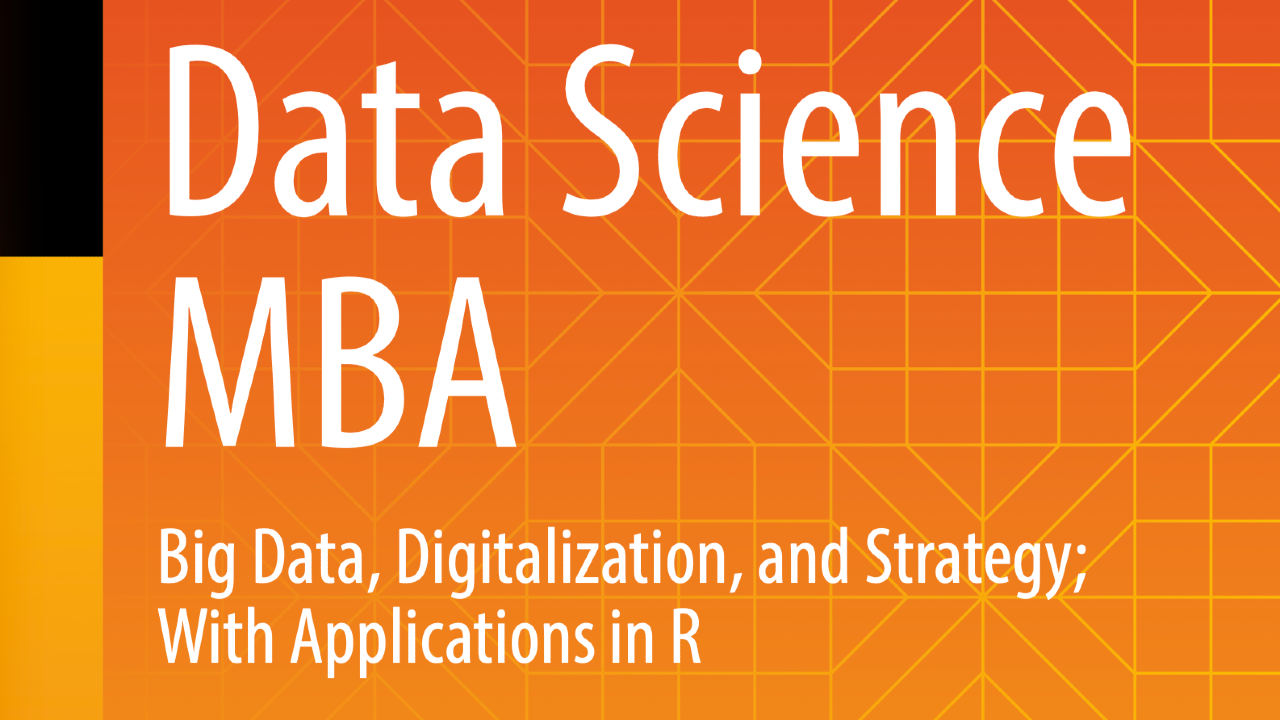
Data Science MBA, subtitled Big Data, Digitalization, and Strategy, is a compact textbook by Alex Coad, a professor at Waseda Business School in Tokyo, published in Springer's Texts in Business and Economics series in 2025. It grew out of an MBA course on data science for management, and it reads like one: half of the book is about how digital technology changes organizations, and half introduces the core statistical and machine learning methods a manager should understand.
The strategic chapters place data science in economic history, comparing digital technology with electrification and discussing why productivity gains from general-purpose technologies arrive slowly. The methods chapters then cover regression, data preparation, visualization, decision trees and text analysis, each with short worked examples in R. The aim is literacy and judgment rather than technical mastery.
Key Topics Covered
- Digitization versus digitalization, big data, and how data science, machine learning and AI relate
- Lessons from electrification and the productivity J-curve
- Models of digital transformation in organizations
- Big data architecture: data lakes, cloud, APIs, microservices and agile teams
- How data science differs from applied statistics, and the skills of data scientists and digital leaders
- Correlation, OLS, logistic and lasso regression, with R examples
- Ethics of data science and AI, including competing notions of fairness
- Data quality, pre-processing and PCA
- User experience, dashboards and data visualization principles
- CART models and random forests for prediction
- Text as data: bag of words, sentiment analysis and topic modeling
- Causal inference
How to Use This Book
It is a first read, designed to be taken in order as a course. The opening chapters on digitalization and transformation set up why the methods matter, and the methods chapters build on each other, from regression to prediction with trees and forests. Readers who only want the strategic view can stop after the organizational chapters; readers who want hands-on practice should run the R examples as they go.
Who Should Read This
The book suits MBA and business students, managers leading digital or data initiatives, and economists or business researchers who want a concise bridge between strategy and data science. Some comfort with basic statistics helps for the regression chapters.
It is too brief for anyone who wants to become a practicing data scientist, and readers who work in Python rather than R will need to translate the examples.
Pros and Cons
Pros
- Unusual combination of economic history, strategy and methods in one short book
- Concise chapters with further reading for each topic
- R examples make the methods concrete
- Covers ethics and fairness alongside technique
Cons
- Short treatment of each method, so it works as an introduction rather than a full course
- Examples use R only
- The strategy chapters are more academic than a typical business book
- Little on modern generative AI or production data systems
Frequently Asked Questions
Do I need to know R?
No, but running the short R examples is the best way to understand the methods chapters.
Is it a technical book?
It is a business-school textbook: conceptual for strategy, light-technical for methods.
How does it compare with Machine Learning for Business Analytics?
That book covers far more methods in depth. Data Science MBA is shorter and spends much more time on strategy and digital transformation.
Who is the author?
Alex Coad, a professor at Waseda Business School, who teaches data science for management.
Look at the chapter list on Springer's page to see whether its mix of strategy and methods fits what you want to learn.